Franklin County rests outside the typical native geographic range of dense desert arachnid populations, yet localized sightings frequently occur when decorative landscaping materials, nursery stocks, or interstate…
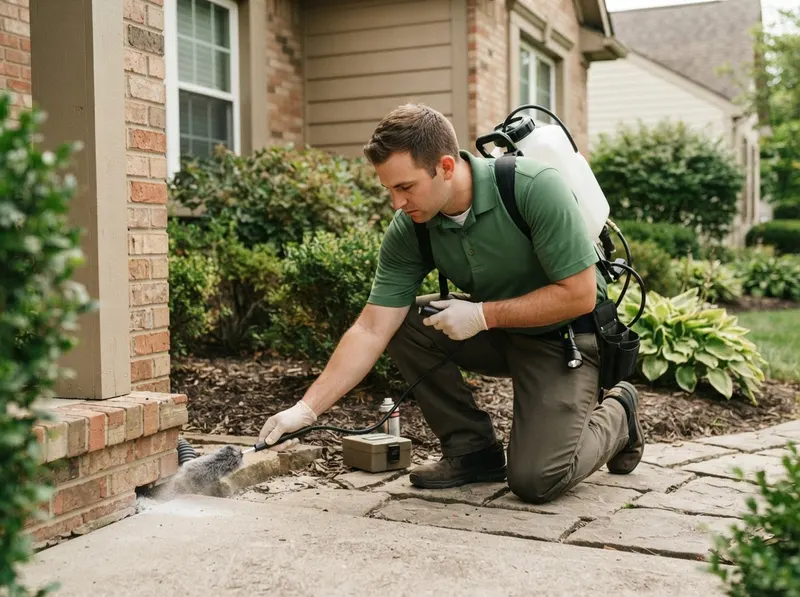
Franklin County rests outside the typical native geographic range of dense desert arachnid populations, yet localized sightings frequently occur when decorative landscaping materials, nursery stocks, or interstate cargo transit into neighborhoods like German Village, Clintonville, and Upper Arlington. Non-native specimens such as the striped bark scorpion hitchhike inside palletized stone, ornamental firewood, and potted specimens delivered to residential properties near the Scioto Mile Promenade or Victorian Village. Once introduced, these nocturnal arachnids exploit damp microclimates beneath mulch beds, river rock installations, and decaying organic detritus, seeking shelter around stone basements or crawlspace vents where moisture levels mirror their survival needs. Grounding management strategies in verified entomological research ensures that environmental remediation prioritizes mechanical barrier fortification over uncalibrated chemical applications, safeguarding indoor living areas while maintaining natural ecological balances.
Structural exclusion represents the definitive barrier mechanism against building ingress. Technicians examine historic limestone masonry foundations common in Grandview Heights, Bexley, and Olde Towne East, using high-output blacklight lamps to identify nocturnal hiding locations along mortar joints and subgrade ledger boards. Following protocols aligned with the EPA Integrated Pest Management standards, our team seals foundation fissures exceeding one-eighth of an inch using elastomeric caulking, metal mesh, and non-toxic silicone barriers. Regulating indoor and perimeter humidity by consulting agricultural extension guidance reduces the primary food sources of predatory arachnids, which include crickets, silverfish, and roaches. When physical entry points around door sweeps and utility penetrations are systematically closed according to residential building inspection standards, arachnids cannot establish interior harborage beneath floorboards or inside drywall chases.
Targeted exterior applications utilize low-impact microencapsulated botanical compounds and natural diatomaceous dusts along weep screeds and sill plates. In compliance with directives from the Ohio Department of Agriculture, chemical exposure to soil and non-target beneficial insects is minimized by avoiding broad-spectrum chemical saturation across turfgrass. Property owners in Franklinton and Worthington Woods seeking structural protection avoid lingering toxic residues by relying on physical leaf-litter removal and ground-clearance measures outlined by the National Pesticide Information Center. Coordinating structural modifications with recommendations from the CDC occupational safety guidelines and the National Audubon Society ensures backyard bird habitats and domestic pets remain completely protected while foundation vulnerability is permanently lowered. For service questions or dispatch scheduling, property managers can reach SummitBloom Pest Protection at (513) 812-8031.
Every job gets a firm, written price after a free on-site visit.
Tell us about your scorpion control columbus, oh job in Columbus and we'll send a clear, written quote, usually the same day.
 SummitBloom Pest Protection