Columbus properties frequently face ant infestations driven by regional weather patterns and neighborhood infrastructure. Along tree-lined avenues in Clintonville, Upper Arlington, and Worthington Woods, mature maples…
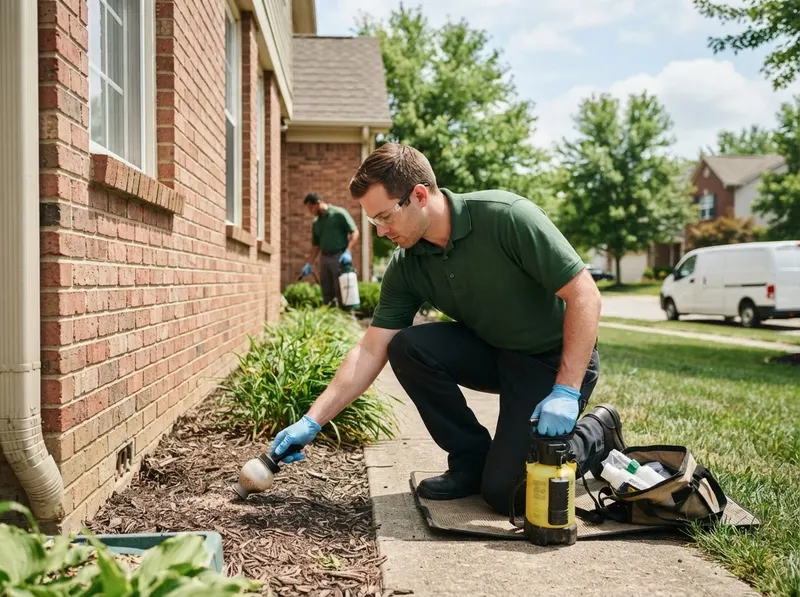
Columbus properties frequently face ant infestations driven by regional weather patterns and neighborhood infrastructure. Along tree-lined avenues in Clintonville, Upper Arlington, and Worthington Woods, mature maples and oaks deliver structural moisture and dead wood nesting sites for carpenter ants (Camponotus pennsylvanicus). In contrast, the historic brick masonry, stone lintels, and tight property lines throughout German Village, Victorian Village, and Olde Towne East provide ideal thermal voids for pavement ants (Tetramorium immigrans). As documented by the National Weather Service Wilmington Forecast Office, Columbus averages 39.8 inches of precipitation annually, pushing opportunistic odorous house ants indoors across Grandview Heights, Bexley, Franklinton, and the Short North Arts District during wet spring and arid late-summer transitions.
Effective ant eradication relies on precise biological mechanics rather than broad-spectrum repellent sprays. Standard retail surface sprays scatter colony members via budding, a biological defense mechanism where a single colony splits into multiple sub-colonies throughout wall voids. SummitBloom Pest Protection follows guidelines set forth by the EPA Integrated Pest Management protocol, deploying slow-acting non-repellent transfer baits. Workers transport active ingredients like dinotefuran back to the brood chamber, neutralizing reproductive queens within 7 to 14 days. These methods align with pest mitigation practices recognized by the Ohio Department of Agriculture Pesticide Regulation, balancing structural defense with family health.
Interior treatments feature reduced-risk botanical active ingredients derived from plant essential oils, avoiding dangerous chemical residues near food prep surfaces, children, and pets. In accordance with the National Pest Management Association technical standards, structural technicians couple colony baiting with exclusion, sealing plumbing penetrations, sill plates, and window framework using copper mesh and elastomeric sealants. Exterior perimeters receive low-toxicity applications governed by the Purdue University Extension urban pest guidelines, establishing a barrier that deters entry while protecting beneficial soil organisms. Property owners can combine indoor eradication with preventative outdoor perimeter protection, depending on structural foundation type and surrounding landscape moisture.
Every job gets a firm, written price after a free on-site visit.
Tell us about your ant control columbus, oh job in Columbus and we'll send a clear, written quote, usually the same day.
 SummitBloom Pest Protection